30 March 2022/Terje Ennomäe
How a conversation analytics tool helps your business
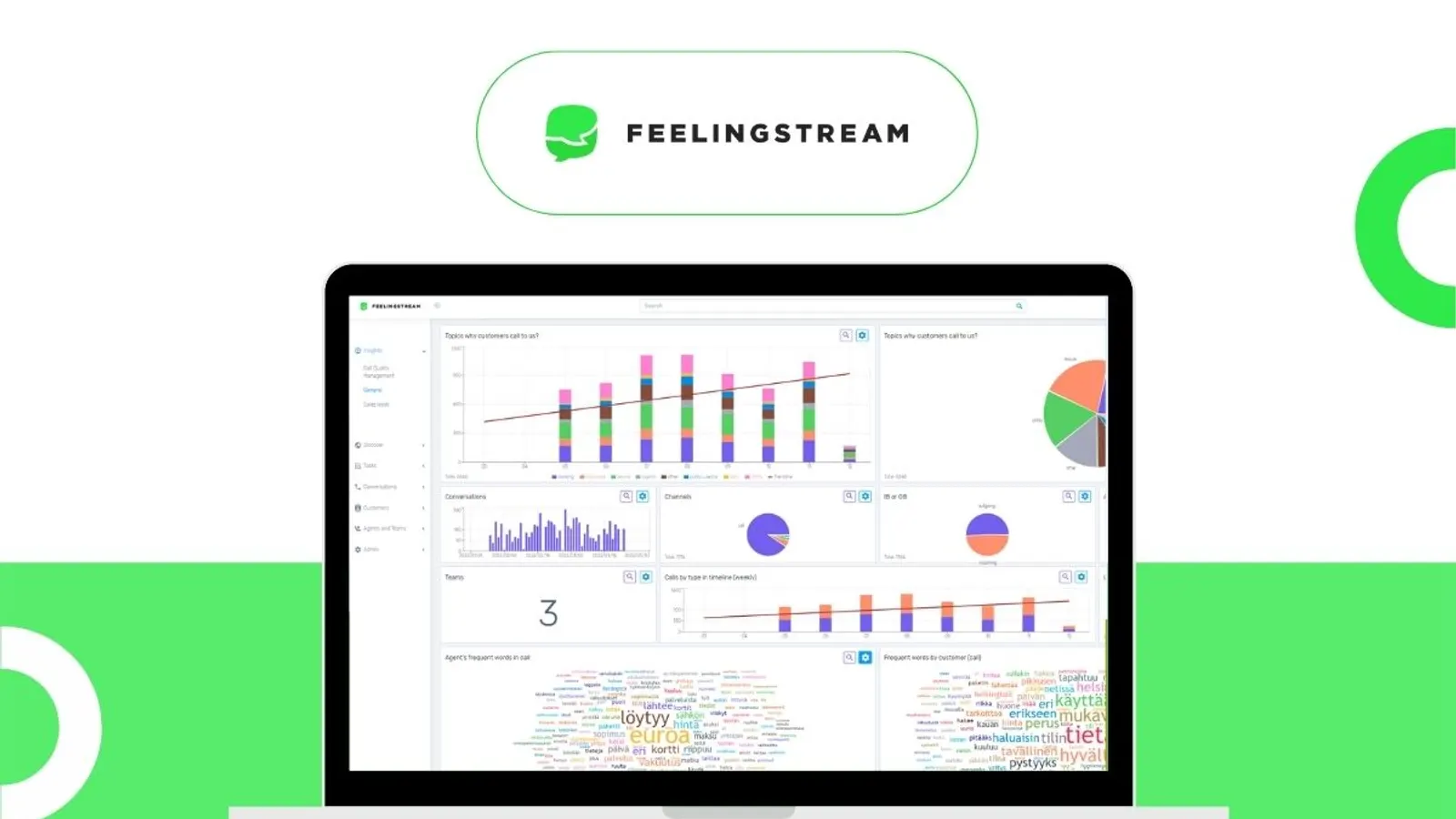
Most businesses find it genuinely hard to know what their customers think of them. The issues are not laid out neatly, so the data needed for important decisions is difficult to pull together — and managers end up deciding in the dark or on gut feeling.
A conversation analytics tool closes that gap. By analysing everyday customer interactions — calls, chat, email and feedback — it gives you the evidence to raise quality, improve efficiency and grow sales. This post walks through what a conversation analytics tool does and where it delivers value across the contact centre.
What is a conversation analytics tool?
Conversation analytics is the process of extracting usable insight from human conversation. It uses natural language processing (NLP) — a mix of linguistics, computer science and artificial intelligence — to analyse what was said, applied on top of speech-to-text for voice calls.
In practice, a conversation analytics tool lets you evaluate voice calls alongside text-based interactions such as live chat and email, so you can study every channel in one place rather than treating each in isolation. For the full background, see what conversation analytics is.
The platform is built for large service providers with sizeable contact-centre teams, and works well across sectors such as telecom, banking and the public sector.
How does it improve customer service quality?
Quality managers usually want more reach into their conversations but lack the hours to listen. With conventional monitoring, they rarely review more than 1–2% of calls — purely because of time.
With every call transcribed, that constraint lifts. Managers keep the audio, but the transcript and enriched data make it far easier to choose the right calls to review. Instead of pulling two or three at random, they can focus:
- Calls with long agent monologues or too much silence.
- Outliers on any numerical measure.
- Keyword searches for topics that have been problematic before.
The result is quality assurance across 100% of calls — and the same approach works for chat and email, not just voice.
How does it improve efficiency?
Efficiency gains often come from simple, specific starting points. A few common ones:
- Long calls? Measure average handling time, find the outliers, classify them by topic, then fix the process or coach agents to bring the time down.
- Self-service being ignored? Find out what customers cannot locate or find too complicated on your self-service site, change it based on the data, and watch avoidable calls fall.
- Email backlog? Automated routing and prioritisation let you surface the most important emails first and cut multi-day handling times.
- Chatbot handing everything off? Analyse which contacts the bot escalates, and when, to find where its flows need improving.
Each of these is a concrete change you can measure before and after — see the use cases for more.
How does it help increase sales?
If you have sales processes, a conversation analytics tool tells you whether they actually happen and whether they work.
- Script compliance. Listening to a handful of calls tells you little about real adherence. Analytics checks whether agents follow the script and use the words you asked for, across every call.
- What good looks like. Compare high and low performers. Are their calls monologues or dialogues? Do they adapt to the customer or force a script? Analysing the patterns in your winning calls lets you refine pitches and processes — and surface potential leads hiding in current contacts.
- Speed on intent. A purchase-intent email that sits in a queue for a week is a lost sale. Automated routing gets high-potential contacts to the right person fast.
Classifiers can highlight the conversations with the greatest sales potential so your team spends time where it counts. See sales monitoring for more.
Frequently asked questions
What is a conversation analytics tool?
Software that turns customer conversations — calls, chat, email and feedback — into structured, searchable data using speech-to-text and natural language processing, so you can analyse quality, efficiency and sales across every interaction.
How is it different from listening to call recordings?
Manual listening covers only 1–2% of calls and is slow. A conversation analytics tool transcribes and enriches every conversation, so you can search, filter and score 100% of them and pick exactly the right ones to review.
Which channels can it analyse?
Voice calls plus text-based channels — live chat, email and feedback — in one place, so you can compare behaviour across channels.
Is it only useful for the contact centre?
No. Quality, operations, sales, product and marketing can all draw on the same data to answer their own questions about customers and processes.
Where to go next
- Understand the discipline: What is conversation analytics?
- Raise quality: Automatic quality assurance
- Grow sales: Sales monitoring
- Explore the platform: Product overview
Ready to stop deciding in the dark? Book a demo and we will show you a conversation analytics tool working on your own customer conversations.