16 December 2025/Terje Ennomäe
Real-time guidance for contact centre sales
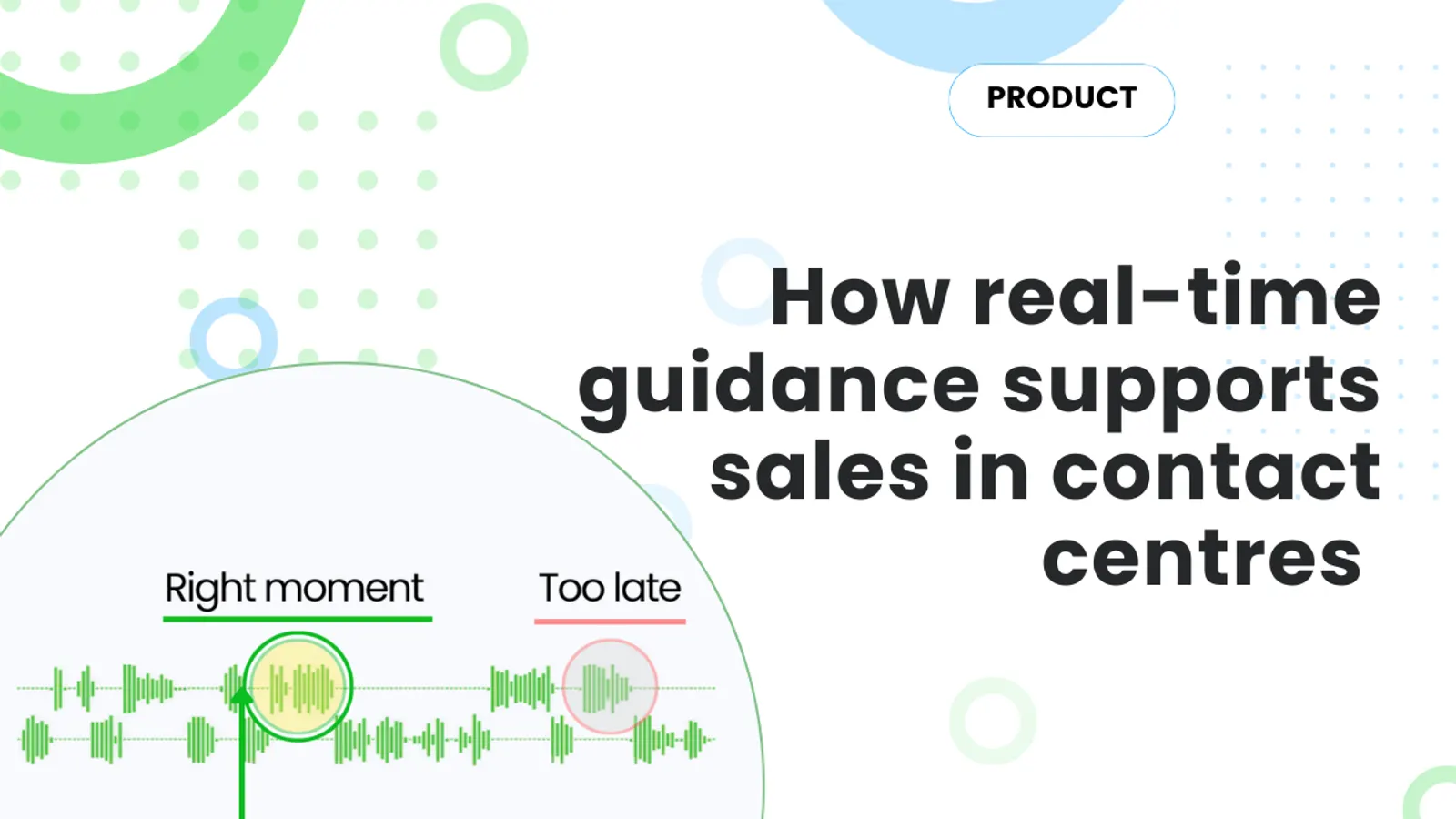
Most companies know which campaigns they want to run, which customers to reach and which offers to present. Email and social channels are one way to deliver them, but contact centre campaigns are different. These calls are personalised and higher-value — sales, upsell, cross-sell and retention — where the agent adapts the argument and responds to the customer in real time. What is written on paper often looks very different from what is actually said on the call.
A large share of lost revenue does not come from weak campaigns or disinterested customers. It comes from something simpler: the offer never reaches the customer during the call, or it arrives at the wrong angle or too late.
When planned campaigns meet live conversations
On paper the flow is clear. Business teams define the next best offer. Marketing and product teams shape the arguments and messaging. The contact centre passes this to agents through training, guidelines and documentation. Then the calls begin, and agents have to apply all of it in fast-moving, unpredictable conversations.
That is where the gaps appear. During the call the agent is balancing customer questions, objections and mandatory steps. In the middle of that, the right moment to present the offer is easy to miss — and by the time the agent can return to the planned message, the opening has already passed.
Why post-call reviews are not enough
Across a team these lost moments add up. A strong campaign can underperform for reasons that stay hidden unless someone listens back to the calls. Growing contact centres rarely have the time or people to review calls in detail, and even when they do, the findings often arrive too late to help the campaign that is running now.
Real-time agent guidance changes the timing of the help. Instead of reviewing calls afterwards, agents receive small, well-timed reminders during the conversation. These nudges do more than remind the agent of the offer — they can suggest a natural way to steer towards the relevant topic, such as a short leading question or a smooth transition. That helps agents raise the offer at the right moment and follow the intended flow without breaking the call or adding pressure. It is the sales-focused side of real-time support.
What real-time guidance actually changes
The result is steadier campaign delivery:
- Agents mention the offer more often and with more confidence.
- Because the conversation is guided naturally towards the topic, offers feel better timed and less forced.
- Missed opportunities become less common, and the gap between the strongest and weakest performers narrows.
New agents benefit most. They learn the rhythm of the call faster, understand where the offer fits, and reach a stable level of performance earlier in onboarding. Early mistakes drop, which lowers the cost of ramp-up across the team.
Managers gain a clearer view of how campaigns play out in real conversations. Instead of guessing whether an offer was mentioned, they can see patterns of timing and delivery — and support their teams in a more focused, timely way. For organisations that rely on upsell, cross-sell and retention, that matters. The team does not need longer calls; it needs the right guidance at the right moment.
How Agent Assist changes call outcomes
Agent assist is designed for exactly this. It listens to the live call, recognises when an offer is relevant and gives an on-screen reminder that helps the agent act at the right moment. The call stays natural, the agent stays in control, and the customer receives the offer as intended.
Where agents also need a fact, price or policy detail to make the offer credible, the knowledge base agent surfaces the right answer in the same moment — so a well-timed offer is also an accurate one.
When offers are made at the right time and in the right way, conversations become more relevant, more persuasive and more productive. Over time that builds confidence in the team, improves consistency across calls and increases the return on the effort spent planning campaigns — a clear difference not only in revenue, but in how smoothly teams perform on every call.
Frequently asked questions
Why do good campaigns underperform on calls?
Usually not because the campaign or the customer is weak, but because the offer is mistimed or missed during a busy conversation. The plan is sound; the delivery in the moment is where value leaks.
How is real-time guidance different from a script?
A script tells the agent what to say. Real-time guidance watches the live conversation and prompts the agent when an offer becomes relevant, suggesting a natural transition rather than a fixed line — so it fits the moment.
Does it make calls longer?
No. The aim is better timing, not more talking. Agents present the right offer at the right point instead of forcing it or missing it, which tends to make calls more efficient, not longer.
How does it help new agents?
New hires learn the rhythm of a call faster and see where offers fit naturally, so they reach steady performance earlier in onboarding and make fewer early mistakes.
Where to go next
- The product: Agent assist
- The sales pillar: Sales monitoring — what it is and why it works
- The broader picture: Real-time support for every call
- Answers in the moment: Knowledge base agent
Ready to improve the timing of your team's sales calls? Book a demo and we will show you how real-time guidance works.