16 April 2018/Terje Ennomäe
Speed is a crucial part of customer experience
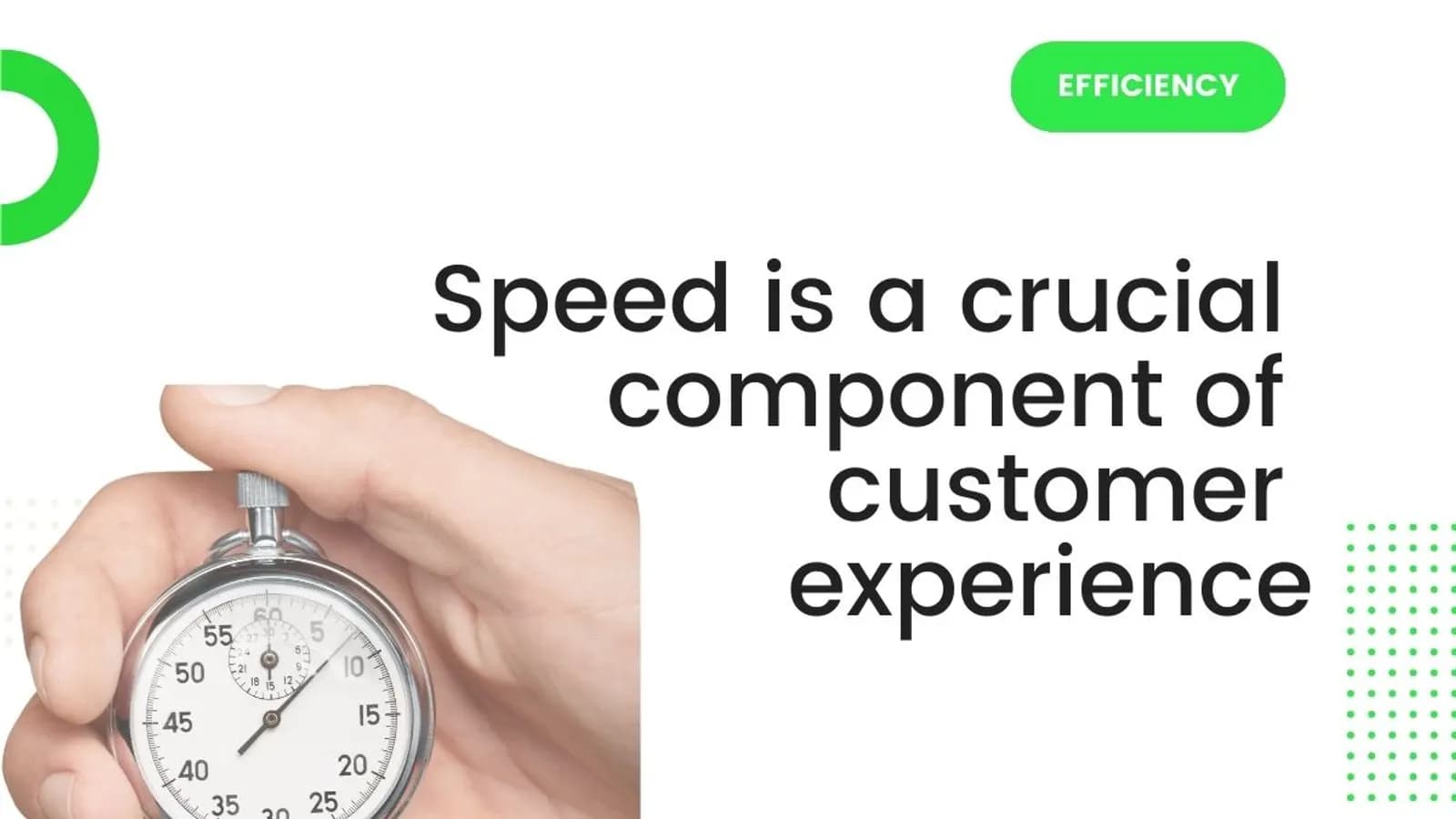
When you are serving an existing customer or trying to win a new one, the speed of your response often decides the outcome. A quick, competent reply signals that the organisation is on top of things. A slow one, however good the eventual answer, leaves the customer wondering whether they were heard at all.
The difficulty is that most inbound queues are handled first in, first out. That treats an urgent, business-critical message exactly the same as a routine one — and the customer who needed a fast answer waits behind everyone else.
This article looks at what "fast" really means today, why prioritising by content beats prioritising by status alone, and how to speed up the responses that matter most.
What counts as fast?
Expectations have shifted. A request sitting in a queue for more than a day now reads as slow, full stop. There was a time when that was acceptable — when information moved on paper and life ran at a quieter pace. Customers are online constantly now and expect service to keep up.
Across large volumes of customer conversations, one pattern holds: faster responses lead to better business results. The channel matters less than you might think. Chat, email, web form, SMS or an automated assistant — the winning combination is always the same: speed plus a high-quality answer.
Customer status versus case urgency
Historically, fast service was a privilege reserved for high-value relationships — private banking being the classic example, where a customer segment buys a higher service level. That model still exists, but it misses something important: urgency is often about the case, not the customer.
A routine customer may have an urgent, high-stakes question — one where they are about to make a significant decision and need an answer now. A high-value customer may send something that can happily wait. Prioritising purely by status gets both of these wrong.
Content-based prioritisation fixes that. By reading what each message is actually about, you can push genuinely urgent cases to the front regardless of who sent them, while lower-priority messages queue behind. This is a core part of an efficiency programme: spending your fastest responses where they change the outcome.
Use AI to lead your speed
Putting intelligence behind the queue means analysing incoming messages and prioritising them by content and urgency, rather than processing them in arrival order. In practice, organisations handling large daily volumes have used this approach to respond to urgent, business-critical matters far sooner than a customer would expect.
The effect on perception is significant. A customer who sends a pressing request and hears back within minutes — not days — remembers that engagement. It turns a routine interaction into a genuinely memorable one, and it does so without adding headcount, simply by ordering the work more intelligently.
Content-based prioritisation also surfaces opportunities beyond service. Analysing inbound messages helps spot sales potential and act on it quickly, so the same mechanism that speeds up support can also help you reach more sales.
Frequently asked questions
Isn't first in, first out the fairest way to handle a queue?
It is the simplest, but it is not the fairest to the customer with the most urgent need. Content-based prioritisation ensures genuinely pressing cases are not stuck behind routine ones, which improves outcomes overall.
How do you prioritise by content?
By analysing each incoming message to understand its topic and urgency, then ordering the queue accordingly. This is part of the wider efficiency approach of acting on what conversations actually contain.
Does speed matter across all channels?
Yes. Whether it is chat, email, web form or SMS, fast plus high-quality is the combination that drives better results. The channel is secondary to the response.
Can prioritisation also help with sales?
It can. The same content analysis that flags urgent service cases can flag sales opportunities, so they are handled quickly. See how text analysis of emails supports this.
Where to go next
- Understand the foundation: Efficiency with AI in customer service
- Speed up email handling: How text analysis of emails improves service
- See the platform: Product overview
- Explore applications: Use cases
Want to respond fastest where it changes the outcome? Book a demo and we will show you how content-based prioritisation works on your data.